

A Georgia visa rejection means your eVisa application was denied due to incomplete documentation, inadmissible travel purpose, or failure to meet eligibility criteria. If your evisa.gov.ge application status shows “Refused,” you can reapply after correcting the issues — but first, you need to understand exactly why your application was rejected and what steps to take next.
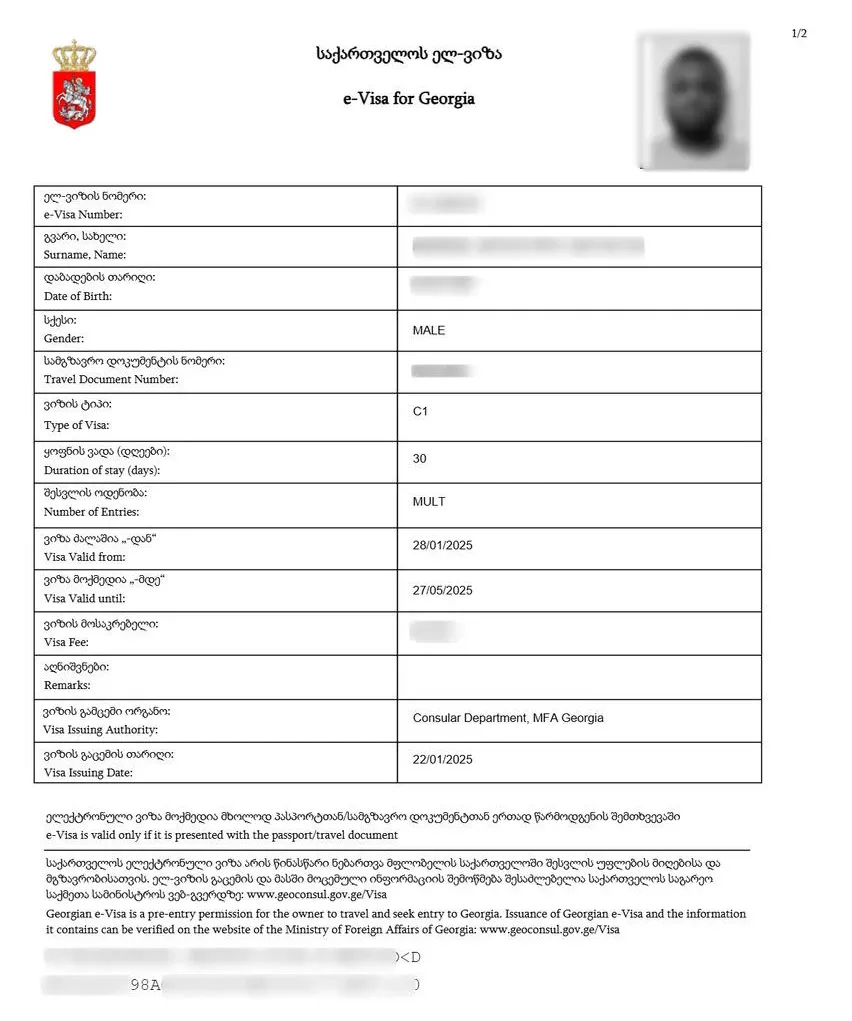
Georgia’s eVisa system processes thousands of applications every year, and while the approval rate is high, refusals do happen. This guide explains the most common reasons for Georgia visa rejection, how to check your application status, and what options you have after a denial.
Common Reasons for Georgia Visa Rejection
Georgia’s Ministry of Foreign Affairs reviews each eVisa application against a set of standard criteria. The following issues are the most frequent causes of rejection.
| Reason | Frequency | Difficulty to Fix |
|---|---|---|
| Incomplete or missing documents | Very common | Easy |
| Passport validity less than 6 months | Common | Requires passport renewal |
| Mismatch between application form and passport data | Common | Easy — reapply with correct info |
| Insufficient proof of accommodation | Moderate | Easy — add hotel booking |
| Unclear travel purpose | Moderate | Medium — clarify intent |
| Poor-quality passport scan or photo | Moderate | Easy — re-upload |
| Previous immigration violations | Rare | Hard — case by case |
| Security or criminal background flags | Rare | Hard — may need legal help |
Incomplete Documentation
The single most common cause of Georgia eVisa refusal is a missing or unreadable document. The system requires a passport scan, passport photo, proof of accommodation, and travel insurance. If any of these are absent, blurry, or in the wrong format, the application will be rejected.
When uploading documents to evisa.gov.ge, make sure every file meets the size and format requirements. See our Georgia visa documents checklist for exact specifications.
Passport Validity Issues
Your passport must have at least six months of validity remaining beyond your planned departure date from Georgia. Even if your passport is valid for five more months, the application will be denied. This is one of the easiest problems to prevent — check your expiry date before starting the application.
Data Mismatch
If your name, date of birth, or passport number in the application does not match your passport exactly, the reviewing officer will reject it. Transliteration differences between passports and English-language forms are a frequent cause. Always copy the information exactly as it appears in the machine-readable zone of your passport.
What Happens When Your Georgia eVisa Is Refused
When your application is rejected, you will receive a notification by email. The status on your evisa.gov.ge account will change to “Refused.” Georgia’s immigration authorities typically provide a brief reason code or explanation, though the details are often vague.
Important: A rejection does not mean you are permanently banned from entering Georgia. You can reapply unless the refusal was due to a serious legal or security issue.
What to Do After a Georgia Visa Rejection
If your Georgia eVisa was refused, follow these steps:
- Read the refusal reason carefully — check your email and the evisa.gov.ge portal for the stated grounds
- Gather the missing or corrected documents — most rejections are fixable with proper paperwork
- Wait before reapplying — there is no mandatory waiting period, but applying immediately without fixing the issue will result in another denial
- Reapply through the same portal — submit a new application at evisa.gov.ge with all corrected documents
- Contact the Georgian consulate — if you believe the rejection was unjustified, reach out to the nearest Georgian embassy or consulate for clarification
For help navigating the reapplication process, review our Georgia eVisa application guide.
Can You Appeal a Georgia Visa Rejection?
Georgia does not have a formal visa appeal process for eVisa decisions. Unlike countries with a structured administrative court system for immigration decisions, Georgia’s eVisa refusals are essentially final — you cannot challenge the decision through a legal proceeding.
However, you have two practical options:
- Reapply with stronger documentation — this is the most effective approach for minor issues like missing documents or unclear travel purpose
- Apply for a consular visa instead — if your eVisa keeps getting refused, visit a Georgian embassy or consulate to apply through the traditional paper-based process, where you can explain your situation in person
Reapplication After Refusal
The evisa.gov.ge system allows you to submit a new application at any time after a rejection. Each application is reviewed independently, so a previous refusal does not automatically disqualify you. However, if you resubmit the same application with the same deficiencies, it will be rejected again.
Before reapplying, address the specific issue that caused the refusal. If you received a generic rejection without a clear reason, compare your application against the Georgia visa requirements and fix any gaps.
How to Avoid Georgia Visa Rejection
The best strategy is to prevent rejection in the first place. Follow these tips when preparing your eVisa application:
- Check passport validity — at least 6 months beyond your departure date from Georgia
- Use a high-quality passport scan — clear, legible, no glare, full bio-data page
- Meet photo specifications — white background, 35×45 mm, taken within the last 6 months
- Book accommodation in advance — upload a hotel confirmation or invitation letter with your name and dates
- Purchase travel insurance — must cover the full duration of your trip with at least 30,000 EUR medical coverage
- Match all data exactly — your name, passport number, and dates must mirror your passport
- State your travel purpose clearly — select the correct visa type and provide supporting documents
Understanding the different Georgia visa types ensures you apply for the right category.
Georgia Visa Rejection for Specific Nationalities
While Georgia’s eVisa system applies the same rules regardless of nationality, applicants from certain countries report higher rejection rates due to stricter document scrutiny. Common reasons for these higher refusal rates include:
- Difficulty obtaining verifiable background documentation
- Higher rates of data mismatch between passports and application forms
- More frequent requests for additional proof of financial means or return travel
If you are applying from a country with historically higher scrutiny, strengthen your application by including a round-trip flight booking, a detailed itinerary, and a bank statement showing sufficient funds for your stay.
How Long Does eVisa Processing Take After Reapplication?
A resubmitted application follows the same processing timeline as a first-time application. Standard processing takes 5-10 business days through evisa.gov.ge. For details on timelines, see our Georgia eVisa processing time guide.
FAQs About Georgia Visa Rejection
Can I reapply for a Georgia eVisa after rejection?
Yes, you can reapply at any time through evisa.gov.ge. There is no mandatory waiting period. However, make sure you have fixed the issue that caused the rejection before submitting a new application — otherwise it will be denied again.
Does a Georgia visa rejection affect future applications?
A single rejection does not permanently disqualify you. Each application is reviewed on its own merits. However, multiple rejections for the same reason may draw additional scrutiny, so address the underlying issues before reapplying.
How do I check if my Georgia eVisa was rejected?
Log into your account at evisa.gov.ge and check the application status. A rejected application will show the status “Refused.” You will also receive an email notification with the outcome.
Can I appeal a Georgia visa refusal?
Georgia does not offer a formal appeal process for eVisa decisions. Your best option is to reapply with corrected documents or apply through a Georgian embassy or consulate for a traditional consular visa.
How long should I wait to reapply after rejection?
There is no official waiting period. You can submit a new application immediately. However, only reapply once you have corrected the issue that led to the refusal.
Will the Georgia eVisa fee be refunded if my application is rejected?
No, the eVisa fee is non-refundable regardless of the application outcome. The fee covers the processing of your application, not the guarantee of a visa.
What is the most common reason for Georgia visa rejection?
Incomplete or missing documents is the most frequent cause. Other common reasons include passport validity issues, data mismatches between the application and passport, and insufficient proof of accommodation.
Can I apply for a Georgia consular visa after eVisa rejection?
Yes. If your eVisa application is repeatedly refused, you can visit a Georgian embassy or consulate to apply for a traditional visa. This gives you the opportunity to present your case in person and provide additional supporting documents.